
When to Visit Amsterdam: Crowds, Cost, and Weather by Month
When to Visit Amsterdam: Crowds, Cost, and Weather by Month
When is the canal walk actually enjoyable — and when are you just fighting through tour groups for a photo? That’s the question that actually matters when planning this trip.
Amsterdam draws around 20 million visitors a year into a city of roughly 219 square kilometers. That density shows up fast. The difference between going in late April versus mid-July is not a minor tweak to your experience — it changes your hotel bill by €150 a night, your wait at the Anne Frank House from 45 minutes to three hours, and whether a canal terrace feels relaxed or chaotic.
Here’s what each season actually delivers, without glossing over the trade-offs.
Amsterdam Weather Month by Month: The Real Numbers
Amsterdam sits at 52°N latitude — roughly the same as Calgary. The North Sea keeps temperatures moderate year-round but also guarantees persistent cloud cover and rain across every single month. There is no dry season here. Pack a compact umbrella regardless of when you go.
| Month | Avg High (°C) | Rain Days | Crowd Level | Mid-Range Hotel (per night) |
|---|---|---|---|---|
| January | 5°C | 18 | Low | €90–€130 |
| February | 6°C | 14 | Low | €95–€140 |
| March | 9°C | 13 | Medium | €110–€165 |
| April | 13°C | 12 | Medium-High | €135–€205 |
| May | 17°C | 13 | High | €150–€225 |
| June | 20°C | 12 | Very High | €170–€285 |
| July | 22°C | 12 | Peak | €205–€360 |
| August | 22°C | 13 | Peak | €195–€340 |
| September | 18°C | 14 | High | €155–€245 |
| October | 13°C | 16 | Medium | €120–€185 |
| November | 9°C | 17 | Low-Medium | €100–€155 |
| December | 6°C | 17 | Medium | €115–€190 |
Two things jump out from that table. Rain days barely shift — you’re looking at 12 to 18 wet days almost regardless of month. And the temperature gap between January and July is only 17 degrees. What shifts dramatically is crowd pressure and cost. Amsterdam’s seasons are mostly a question of crowds and money, not sun versus rain.
September and October are genuinely underrated. Temperatures are still comfortable, the summer crush has thinned, and hotel prices drop sharply from their August peak. Heritage Weekend (Open Monumentendag) in mid-September opens normally closed historic buildings for free. Worth knowing.
Summer (June–August): Worth It — But Only If You Pre-Book Everything
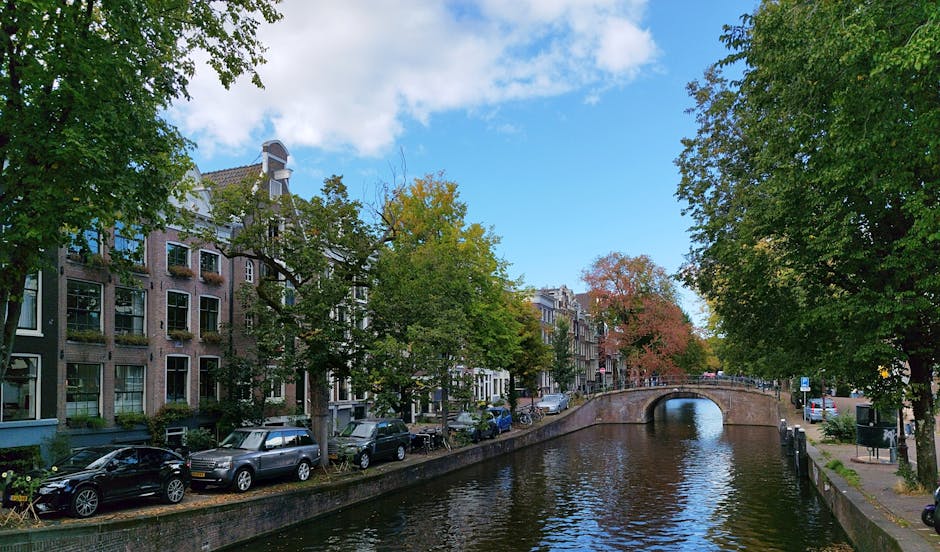
Summer in Amsterdam is overhyped as a spontaneous trip. It’s entirely worth doing, but only with obsessive advance planning.
The weather peaks at 22°C — pleasant, not hot. Canal terraces are buzzing, the Vondelpark fills up, and evening light stretches until 10pm. The problem is pure volume. The Rijksmuseum receives around 2.5 million visitors annually, with the bulk arriving between June and August. Walk-up admission exists, but expect 60–90 minute queues without a timed-entry booking. The Van Gogh Museum sells out its Saturday slots up to three weeks ahead in July. The Anne Frank House requires reservations made 8 weeks in advance to get a reasonable time slot.
Hotel prices swing hard. The Hotel V Nesplein — a stylish mid-range option near the city center — runs around €165 per night in March. By July it’s hitting €290–€330. The Andaz Amsterdam Prinsengracht, a design hotel directly on the canal, can reach €620 per night during peak summer weeks. Canal boat tours, which cost €15–€22 per person in shoulder season, sell out by 11am on summer weekdays.
Amsterdam Pride runs late July through early August and draws over 500,000 people for the canal parade alone — one of the largest in Europe. If that’s why you’re coming, plan around it. Accommodation within walking distance of the Prinsengracht parade route books out months ahead.
Go in summer if outdoor cafe culture is central to your trip, you’re attending Pride, or you’re traveling with children who need warmth and long daylight. Non-negotiable preparation: book flights, museum timed entries, and hotels at least four months out. Do not show up expecting to wing it.
April and May: The Strongest Overall Case for Most Travelers
Mid-April through early May is where the trade-offs tip most clearly in the visitor’s favor. Not because the weather is reliably gorgeous — it isn’t — but because almost every other factor improves.
Why April Works So Well
Temperatures sit between 11°C and 14°C, which is jacket weather but far from unpleasant. Rain is still a regular presence, roughly every third day. But daylight expands to 14–15 hours by late April, which translates to long evenings wandering the Jordaan neighborhood or cycling along the Amstel River without feeling rushed.
The headline draw: Keukenhof Gardens in Lisse, 35 kilometers southwest of Amsterdam, opens mid-March and runs through mid-May. Roughly 7 million tulips bloom across 32 hectares — it’s genuinely one of the most spectacular horticultural displays in Europe, not just a tourist cliché. Entry costs €20, and getting there means a €4–€5 train to Leiden followed by a direct bus (the Keukenhof Express). Crowds are real — around 1.5 million visitors per season — but the gardens are large enough to absorb them without feeling claustrophobic if you arrive before 10am.
King’s Day (Koningsdag) on April 26 transforms Amsterdam completely. The entire city turns orange for the Dutch king’s birthday. Canal boats are crammed with revelers, every street holds a vrijmarkt (open-air flea market), and live music erupts from unexpected corners of the Jordaan. Hotel prices spike 40–60% for King’s Day weekend specifically — book at minimum three months ahead if you want any room within cycling distance of the action.
May vs. April: Which One Actually Wins?
May is warmer, averaging 17°C, and Keukenhof stays open through mid-month. But by the third week of May, crowds ramp meaningfully toward summer levels. Liberation Day on May 5 is a Dutch national holiday with free outdoor concerts and festivals drawing large domestic attendance on top of the usual tourist load.
The verdict: mid-April to the first week of May is the sweet spot. Tulips are at peak bloom, King’s Day is within reach, hotel mid-range rates sit around €140–€210 per night, and museum queues are manageable with 2–3 weeks’ advance booking rather than months.
Cycling Conditions in Spring
Amsterdam has over 500 kilometers of dedicated cycle paths. Spring temperatures make cycling comfortable, and the paths are less clogged with inexperienced tourist riders than in summer. Macbike rents bikes from €14.75 per day or €24 for 24 hours; Starbikes comes in slightly cheaper at €12.50 per day, with locations near Centraal Station and Leidseplein.
One practical note: Amsterdam cycling infrastructure moves fast. Dutch riders do not slow for hesitant tourists. Stay right, signal turns with your arm, and use the bell. Tram tracks are genuinely dangerous for thin bike tires — cross them at a 90-degree angle or you will fall.
Winter Is the Right Answer If Museums Are Your Priority
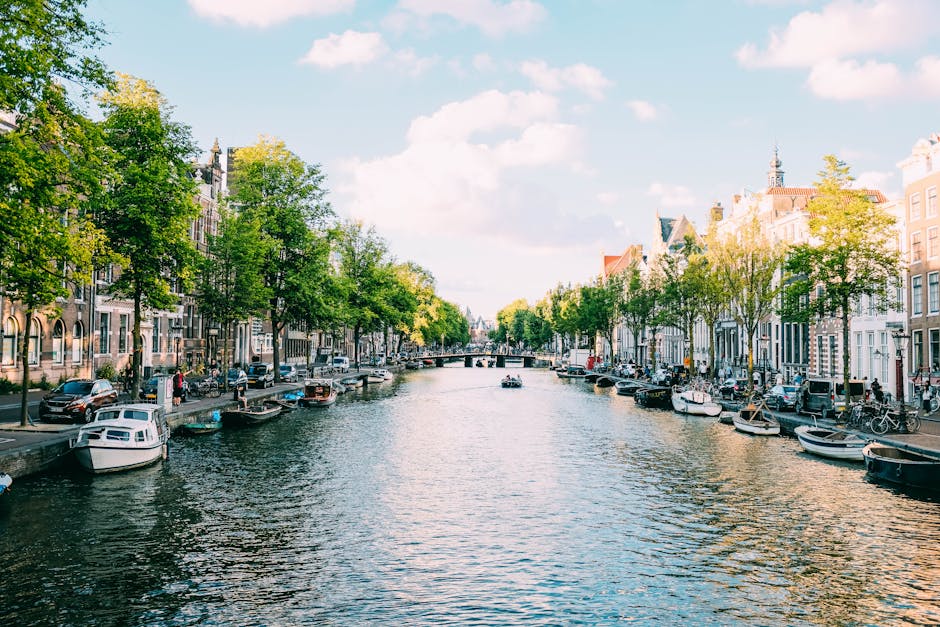
January and February are cold (5–6°C), dark (nine hours of daylight), and genuinely quiet. The Anne Frank House has walk-up availability. The Rijksmuseum is calm. The CitizenM Amsterdam City drops to €95–€120 per night. If your Amsterdam trip is built around museums and canal walks rather than outdoor terraces, winter delivers the same city at roughly half the summer price with none of the queues.
Amsterdam’s Event Calendar: What to Chase and What to Avoid
Some events are worth building an entire trip around. Others just mean the hotels cost more. Here’s the distinction:
- Amsterdam Light Festival (late November–mid-January): Illuminated art installations along the canals. Walking the route at night in December is quietly spectacular. Crowds are modest. This is one of the best reasons to visit in winter.
- Keukenhof Gardens (mid-March to mid-May): Worth a day trip from anywhere in the city during this window. Non-negotiable if tulips are even slightly on your list.
- King’s Day — April 26: One of Europe’s best street parties. Book accommodation months out. Prices spike but the experience is unique.
- Liberation Day — May 5: Free concerts across the city, large domestic crowds. Adds energy but also adds pressure to accommodation.
- Holland Festival (June): Major performing arts festival drawing international acts to venues across Amsterdam. Worth checking the program if contemporary theater or music is your thing.
- Amsterdam Pride (late July/early August): Canal parade draws 500,000+ attendees. One of the largest Pride events in Europe. Plan accommodation at least four months out.
- Open Monumentendag (mid-September): Two days when normally closed historic buildings open for free. Low-key, high-value, and almost entirely missed by non-Dutch travelers.
- Sinterklaas Arrival (mid-November): The Dutch Santa arrives by boat in a city-wide celebration. Festive and very local in atmosphere.
The three events worth building a trip around: King’s Day, Amsterdam Pride, and the Amsterdam Light Festival. Everything else is a nice bonus rather than a reason to rearrange your dates.
Flights and Hotels: When Prices Actually Drop

When Are the Cheapest Months to Fly to Amsterdam?
Schiphol Airport (AMS) is one of Europe’s busiest hubs, served by KLM, easyJet, Ryanair, Transavia, British Airways, and dozens of transatlantic carriers. The competition keeps baseline fares reasonable, but pricing still swings significantly by season.
January and February offer the lowest fares consistently. London Gatwick to Amsterdam on easyJet runs £20–£55 return in January. From New York JFK on KLM or Delta, January transatlantic fares fall to $440–€660 return versus $900–$1,400 in July. If you’re optimizing on cost, research on whether January flights really save money is directly applicable to Amsterdam — it’s one of the destinations where the winter dip is predictable and real. That said, using a systematic approach to international flight searches matters more than the month itself — flexible date searches and fare alerts will outperform guessing at the calendar.
How Far in Advance Should You Book Hotels?
Amsterdam hotels run aggressive dynamic pricing. The same room at the Hotel The Exchange near Dam Square can cost €115 on a Tuesday in February and €315 on a Saturday in July. A few reliable benchmarks:
For January, February, and November: book 3–4 weeks out and you’ll find good rates. For March, October, and early June: 4–6 weeks is comfortable. For April (including King’s Day weekend) and May: book 10–12 weeks out minimum. For July and August: 4–5 months ahead is not excessive.
The Hotel Brouwer on Singel canal — a small, historic canal house with eight rooms — books fast even in slow season and drops to around €98–€110 per night off-peak. The Conscious Hotel Westerpark, a solid eco-focused mid-range property, runs €130–€160 in spring and €230–€290 in peak summer.
Is the I Amsterdam City Card Worth Buying?
The I Amsterdam City Card covers unlimited GVB public transport, free entry to 70+ museums including the Rijksmuseum, Amsterdam Museum, and NEMO Science Museum, plus discounts at various restaurants and attractions. Pricing in 2026: 24-hour card €65, 48-hour €85, 72-hour €100, 96-hour €115. Do the math for your itinerary. If you’re hitting two or three major museums per day, it pays for itself easily — the Rijksmuseum alone is €22.50 entry. For a relaxed trip built around walking and canal cafes, it won’t break even.
Amsterdam by Season: Quick Comparison
| Season | Best For | Main Downside | Mid-Range Hotel (avg/night) | Verdict |
|---|---|---|---|---|
| Spring (Apr–May) | Tulips, King’s Day, cycling, manageable crowds | Unpredictable rain, King’s Day price spikes | €140–€215 | Best overall |
| Summer (Jun–Aug) | Long days, outdoor events, Amsterdam Pride | Peak crowds, expensive, must pre-book everything | €195–€355 | Great if planned 4+ months out |
| Autumn (Sep–Oct) | Quieter museums, comfortable temps, Heritage Days | Rain increases, daylight shortening | €130–€210 | Underrated — strong second choice |
| Winter (Nov–Feb) | Lowest prices, Light Festival, empty museums | Short days (9 hrs), cold, limited outdoor culture | €95–€155 | Best for budget museum trips |