
Carry-On Luggage That Actually Fits: Size Rules, Top Picks, and What to Skip
Picture this: you’re standing at the gate, boarding pass scanned, hand on the handle of your carry-on — and a gate agent pulls it aside. Doesn’t fit the overhead sizer. You pay $35. Your bag disappears into cargo while you board empty-handed.
This isn’t rare bad luck. It happens dozens of times on every busy flight, almost always for the same preventable reasons. The carry-on luggage market is enormous and poorly regulated — manufacturers use their own measurement standards, airlines enforce different size limits, and the gap between those two things costs travelers money daily.
Before you buy, you need to understand three things: real airline limits by carrier, what the measurement fine print on luggage listings actually means, and which bags genuinely hold up in practice.
Why “Carry-On Approved” Means Almost Nothing
No federal standard defines what a carry-on bag must measure. Every airline sets its own rules. The phrase “airline-approved carry-on” that shows up in almost every luggage product listing is a marketing claim with no regulatory teeth behind it.
US major carriers (American, Delta, United) have converged around 22 x 14 x 9 inches as their standard — that’s a coincidence of industry convention, not a rule. Southwest is slightly more generous at 24 x 16 x 10 inches. European budget carriers operate under entirely different frameworks. Ryanair’s limit (55 x 40 x 20 cm, roughly 21.7 x 15.7 x 7.9 inches) is narrower in the depth dimension than most American carry-ons, and they enforce it with physical sizers at the gate.
The Measurement Problem Nobody Explains
When a luggage brand says their bag is 22 x 14 x 9 inches, they’re often measuring the exterior shell without handles, feet, or spinning wheel housings. Add those and a “22-inch” bag becomes 23.5 to 24 inches in total height. Same with depth — most bags with structured exterior pockets measure 1-2 inches deeper than the listed spec.
The honest number to look for is the overall exterior dimension including all protrusions. Some brands (Travelpro, Away) publish this. Many don’t. If a brand only lists interior dimensions, treat that as a red flag and look elsewhere.
The practical target: aim for a bag that measures no more than 21.5 inches in height from the bottom of the wheels to the top of the case (not the extended handle). That gives you a half-inch buffer on the most common US limit and a better chance of clearing European sizers without a fight.
When International Routes Change Everything
Flying US domestic on full-service airlines with a 22 x 14 x 9 bag? Probably fine. Adding a Ryanair connection, a Wizz Air segment, or any ultra-low-cost European carrier? Your bag may get forced into the hold — and you’ll pay €40-€65 for the privilege.
The depth dimension is what kills most US-sized carry-ons on European carriers. Ryanair’s 20cm depth limit (7.9 inches) is stricter than most American bags, which typically run 9-10 inches deep. easyJet is more forgiving at 25cm. Vueling and LEVEL vary by route and season.
If you regularly book mixed itineraries, you have two real options: buy a smaller bag that fits every carrier, or always book priority boarding on European legs so you guarantee overhead bin access before it fills. There’s no third option that’s painless.
Airline Carry-On Size Limits at a Glance
| Airline | Max Size (L x W x H) | Weight Limit | Enforcement Level |
|---|---|---|---|
| American Airlines | 22 x 14 x 9 in | None listed | Occasional sizer at gate |
| Delta | 22 x 14 x 9 in | None listed | Moderate — varies by load factor |
| United | 22 x 14 x 9 in | None listed | Stricter on full flights |
| Southwest | 24 x 16 x 10 in | None listed | Most lenient US carrier |
| Spirit | 22 x 18 x 10 in | None listed | Enforces at gate on full flights |
| Ryanair | 55 x 40 x 20 cm (21.7 x 15.7 x 7.9 in) | 10 kg (22 lbs) | Strict — physical sizer at most gates |
| easyJet | 56 x 45 x 25 cm (22 x 17.7 x 9.8 in) | 15 kg (33 lbs) | Moderate — varies by airport |
The Best Carry-On Bags — What You Actually Get for the Price
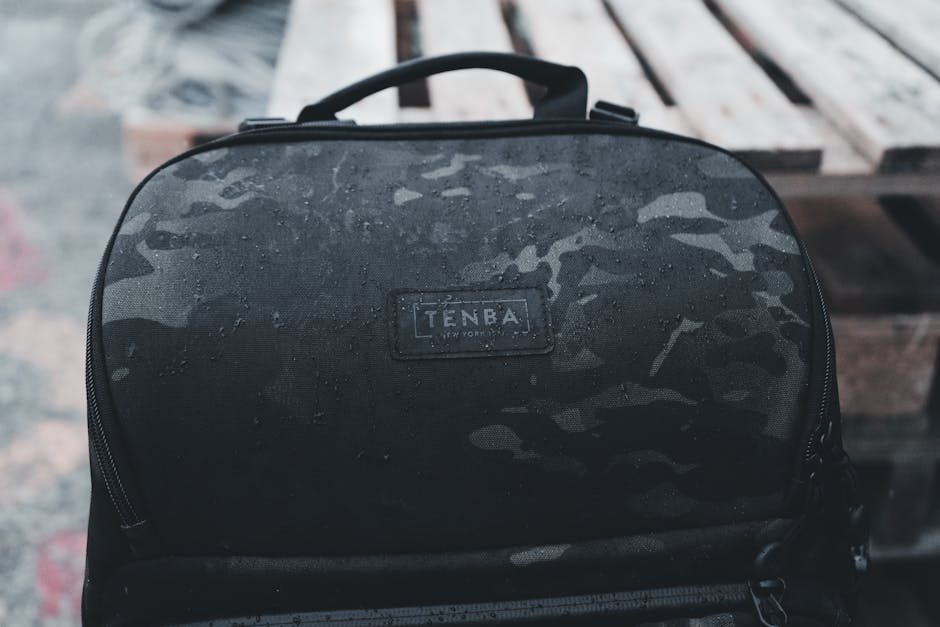
Five bags dominate this category in 2026. Here’s how they compare on the specs that matter before you’re standing at a gate sizer.
| Bag | Exterior Dimensions | Empty Weight | Price | Shell |
|---|---|---|---|---|
| Away The Carry-On | 21.7 x 13.7 x 9 in | 7.4 lbs | $295 | Polycarbonate hard shell |
| BÉIS The Carry-On Roller | 22 x 14 x 9 in | 8.4 lbs | $228 | Polycarbonate hard shell |
| Travelpro Platinum Elite 21″ | 22 x 14 x 9 in | 8.1 lbs | $300 | Ballistic nylon soft shell |
| Samsonite Winfield 3 DLX 20″ | 20 x 14.5 x 9.5 in | 6.8 lbs | $130–$150 | Polycarbonate hard shell |
| Monos Carry-On Pro | 21.7 x 13.8 x 9 in | 7.7 lbs | $275 | Polycarbonate hard shell |
The Case for BÉIS at $228
BÉIS (founded by actress Shay Mitchell) gets dismissed as a lifestyle brand by serious travelers. That’s a mistake. The BÉIS Carry-On Roller at $228 is a genuinely well-built hard-shell bag with 360-degree dual spinner wheels, a TSA-approved combination lock built into the zipper, and a clamshell opening with mesh divider, compression packing straps, and a separate laundry section. The interior organization is better than Away’s at $67 less.
The real weakness is weight. At 8.4 lbs empty, it’s the heaviest on this list — heavier than the soft-shell Travelpro, which has more packing volume. On Ryanair with a 10kg carry-on limit, that’s 8.4 of your 22 lbs gone before you pack a single item. On US full-service carriers with no carry-on weight limits, that number is irrelevant.
For travelers who want near-premium build quality at a sub-$250 price point, BÉIS is the honest pick. The quality gap between BÉIS and Away is marginal. The price gap is $67. The gap between BÉIS and a Samsonite Winfield at $140 is real — but so is the $88 difference in cost.
When to Choose Travelpro Over Everything Else
Flight crews use the Travelpro Platinum Elite because of operational durability, not aesthetics. The Duraguard ballistic nylon shell doesn’t crack under overhead bin pressure, resists abrasion from bin edges, and the MagnaTrac spinner wheels are individually replaceable when they wear down — something no hard-shell bag on this list allows. The bag itself is repairable: zipper replacement, wheel replacement, handle replacement, all serviced at Travelpro centers under a 5-year warranty.
It doesn’t look as clean as Away or BÉIS in photos. It fits in every US domestic overhead bin, it flexes into tight regional jet bins where hard shells don’t, and it doesn’t scuff. If you fly 20+ times a year, this is the honest answer. Over a 7-year ownership window, the Travelpro costs less per trip than any other option on this list.
Samsonite Winfield 3 DLX — The Underrated Budget Pick for Europe
At $130-$150, the Samsonite Winfield 3 DLX 20″ does something no other bag here does: it fits comfortably within Ryanair’s depth limit at 9.5 inches, while still being a full hard-shell bag. The smaller 20-inch footprint is a tradeoff — less packing volume than a 22-inch bag — but it clears European budget carrier sizers without priority boarding.
The math is clear. Two round trips on Ryanair with a gate-check fee (€40 each way, both legs) costs €160. The price difference between this Samsonite and a BÉIS or Away is roughly $80-$165. The fee avoidance pays for the bag difference in a single European trip. For frequent Europe budget travelers, this isn’t a close call.
Hard Shell vs. Soft Shell
Soft shell wins for most travelers because it compresses 2-3 inches when forced into a packed overhead bin — which is how it gets in when hard-shell bags don’t. On regional jets (Embraer 175, CRJ-700), bins are physically smaller. That flex is the difference between keeping your bag on the plane and losing it to the belly.
Hard shell protects fragile contents, resists water, and holds its shape when gate-checked repeatedly. For standard trips on mainline widebody or narrowbody aircraft, the bin flexibility argument favors soft shell every time.
Five Mistakes That Get Bags Gate-Checked
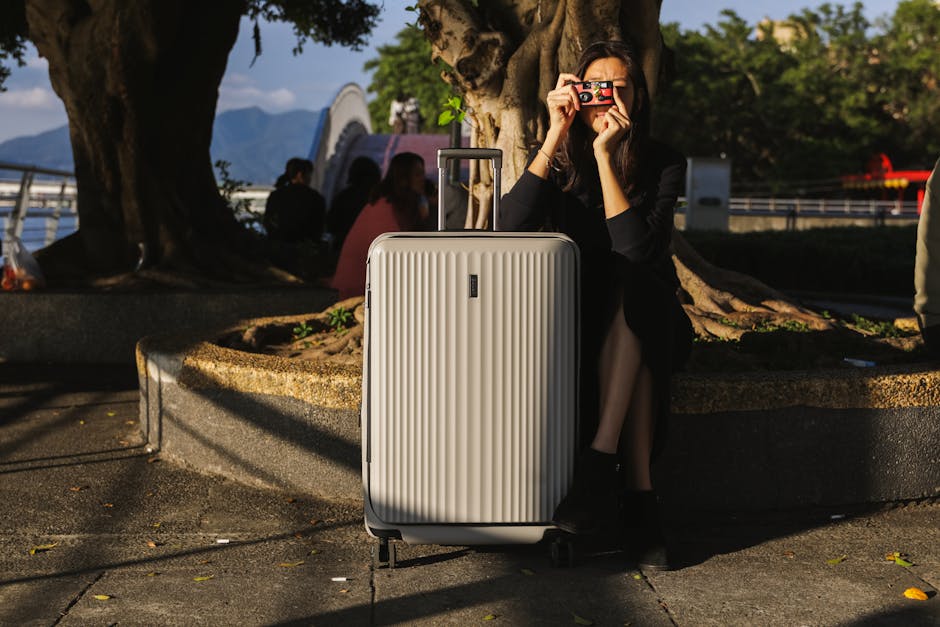
These are the actual causes — not “it was a full flight” (that’s the outcome), but the specific, preventable errors behind most forced gate-checks.
- Buying based on interior dimensions. Interior capacity is useful for packing planning. For airline compliance, it’s irrelevant. Airlines measure exterior dimensions — wheels included, handle housing included. A bag that advertises 40L capacity and a 22-inch interior can easily measure 23.5 inches exterior. Always confirm published exterior overall dimensions before purchasing, and if the brand doesn’t list them, search for user-measured reviews.
- Overpacking to the point of shape distortion. A 22-inch bag crammed past its capacity bows outward by 1-2 inches per side. Overhead bin sizers have no tolerance for that. If your zipper is strained when closing, you may have turned a compliant bag into a non-compliant one. Compression packing cubes (Eagle Creek Pack-It Specter sets work well) create uniform internal pressure rather than random bulge and keep the bag’s shape intact.
- Ignoring carry-on weight limits on budget carriers. American, Delta, and United don’t set carry-on weight limits. Ryanair, Spirit, and most European budget carriers do — 10kg (22 lbs) for Ryanair. An empty BÉIS Carry-On Roller weighs 8.4 lbs. Add a laptop (4-5 lbs), chargers (1 lb), shoes (2-3 lbs), and three days of clothes, and you’re over before toiletries. Weigh your packed bag at home on a luggage scale — not at the gate where you have no options.
- Assuming basic economy includes overhead bin access. On American, Delta, and United, basic economy fare classes restrict passengers to one personal item under the seat. Your carry-on goes below the plane and you pay the checked bag fee ($35-$45 typically). This catches travelers constantly because it’s buried in fare class fine print rather than prominently displayed at booking. Check your fare class before assuming anything about overhead bin access.
- Boarding late and gambling on overhead space. When you board in the final group on a full domestic flight, bins near your seat are full. Gate agents check bags in this situation routinely — even bags that are properly sized and within limits. The fix is earlier boarding position: priority boarding costs $9-$15 on most US carriers, or it comes with certain travel credit cards. This is a boarding problem that gets misdiagnosed as a luggage problem.
The Clear Pick for Each Type of Traveler
Fly primarily US domestic on major carriers more than 15 times per year? Buy the Travelpro Platinum Elite 21″ at $300. The durability, repairability, and overhead bin flexibility are worth the price over a 7-10 year ownership window. No other bag on this list comes close for the road warrior use case.
Mix US domestic with European budget carrier routes? Buy the Samsonite Winfield 3 DLX 20″ at $130-$150. The smaller footprint clears Ryanair’s sizer, and the money saved versus a BÉIS or Away bag covers multiple gate-check fees you’ll now avoid.
Fly US domestic full-service carriers 5-12 times a year and care about how your bag looks? The BÉIS Carry-On Roller at $228 is the honest mid-range choice — better value than Away, better build than discount options, and designed with enough organizational detail to actually be useful on a 4-day trip.
The single most expensive thing you can do is buy the wrong bag for your specific route mix, then pay gate-check fees repeatedly to confirm the mistake.