Marrakech Vs Fes: Marrakech vs. Fes: Which Moroccan City Wins for Culture in 2026?
In 2026, Fes received roughly 1.2 million overnight visitors. Marrakech received over 3 million. That gap is not about culture — it’s about marketing, airport capacity, and package tourism. For a traveler in 2026 deciding between these two cities, the real question is not which has “more” culture. It is which type of culture you actually want to experience. This article breaks down the difference by the only metrics that matter: authenticity of access, depth of historical layers, cost of immersion, and the specific cultural experiences each city offers that the other cannot match.
The Core Difference: Living Museum vs. Living City
This distinction is the single most important thing to understand before booking. Marrakech, since the 1960s, has consciously curated its image as a cultural destination for foreigners. The medina is beautiful, but it is also a stage. Shopkeepers speak four languages. Riad owners offer cooking classes with printed recipe cards. The performance of Moroccan culture is the product.
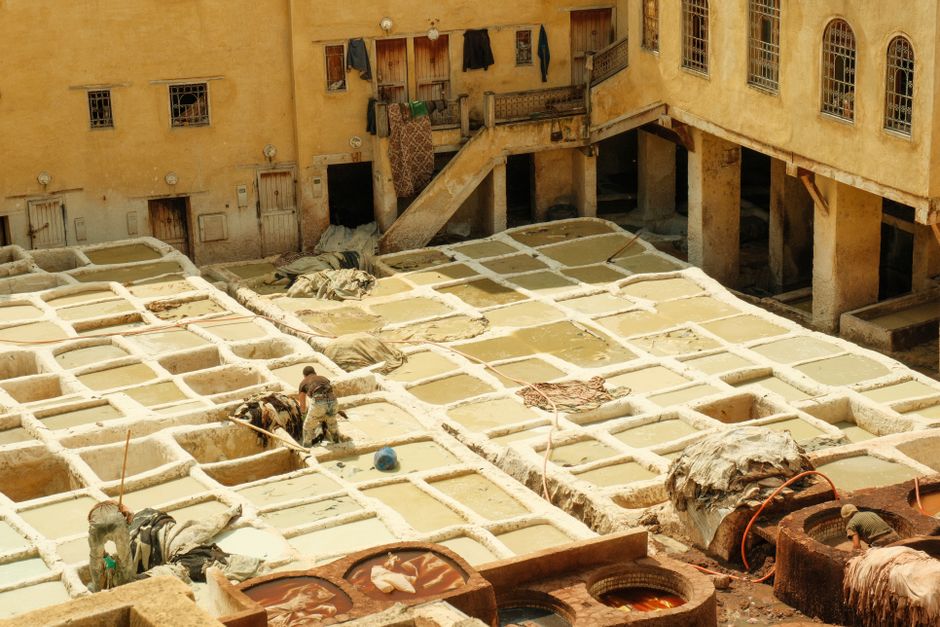
Fes is not a performance. Fes is a 1,200-year-old city that still functions largely as it did in the 14th century. The tanneries are not a tourist show — they are the only place in Morocco producing leather for the local market using traditional methods. The University of Al-Qarawiyyin, founded in 859 AD, still holds classes. When you get lost in the Fes medina (and you will), no one will offer to guide you back for a fee — not because they are unfriendly, but because the concept of a lost tourist is not yet fully integrated into the city’s operating system.
For a culture buff in 2026, this means one thing: Marrakech offers curated, accessible, comfortable cultural consumption. Fes offers raw, unstructured, occasionally uncomfortable cultural immersion. Neither is objectively better. But they are fundamentally different products.
Museums and Historical Sites: Where the Depth Differs
Marrakech has invested heavily in museum infrastructure over the last decade. The Museum of African Contemporary Art Al Maaden (MACAAL) opened in 2016 and now holds one of the most significant collections of contemporary African art on the continent. The Yves Saint Laurent Museum, adjacent to the Jardin Majorelle, is a masterclass in modernist exhibition design. Both are world-class facilities with English labels, audio guides, and climate control.
Fes has the Dar Batha Museum, housed in a 19th-century palace, displaying traditional Moroccan crafts in cases that have not been updated since the 1980s. The labels are in French and Arabic. The lighting is poor. The collection, however, is superior — particularly the woodwork and stucco from the Marinid period, which no museum in Marrakech can match. The Al-Attarine Madrasa and Bou Inania Madrasa are not museums at all — they are functioning religious schools that allow visitors during non-prayer hours. The tilework in Bou Inania is widely considered the finest surviving example of Marinid architecture in existence.
The verdict for 2026: If you want polished museum experiences with contemporary curation, Marrakech wins. If you want to see medieval architecture in its original context, with no interpretive layer between you and the object, Fes wins. Most culture buffs will eventually want both, but if you can only pick one city, ask yourself whether you prefer the frame or the painting.
Food Culture: Tourist Tasting Menus vs. Uncompromising Tradition
Marrakech has excellent restaurants. Nomad, Le Jardin, and Dar Yacout all serve refined Moroccan cuisine in beautiful settings. The problem is that most of these restaurants are serving a version of Moroccan food adapted to European palates — less spice, smaller portions, plated individually rather than family-style. The tagines arrive deconstructed. The couscous is light and fluffy, not dense and buttery as it is in Moroccan homes.
Fes does not have restaurants like this. What Fes has is street food that has not changed in generations. The b’stilla at Chez Rachid is made with squab, not chicken, and the sugar-to-cinnamon ratio is exactly what it was in the 1950s. The grilled meat stalls near Bab Bou Jeloud serve liver and heart alongside the standard kebabs — if you ask for something “not too spicy,” the vendor will look at you with honest confusion. The hammam culture in Fes is also more authentic: the traditional bathhouses in the medina cost 15 dirhams ($1.50) and are used by local women, not tourists paying $40 for a “spa experience.”
A practical comparison for 2026:
| Category | Marrakech | Fes |
|---|---|---|
| Fine dining options | 15+ established restaurants with English menus | 3-4 restaurants with English menus |
| Average cost for a sit-down dinner | 200-400 MAD ($20-40) | 80-150 MAD ($8-15) |
| Street food reliability | Variable; some stalls cater exclusively to tourists | Consistently local; few tourist-oriented stalls |
| Availability of cooking classes | Widespread; 20+ options in English | Limited; 3-4 options, mostly in French |
| Hammam authenticity | Mostly spa-oriented; 300+ MAD ($30+) | Traditional neighborhood hammams; 15 MAD ($1.50) |
The verdict: Marrakech is better for travelers who want a comfortable, curated food experience with variety. Fes is better for travelers who want to eat what Moroccans actually eat, prepared the way it has always been prepared, at a fraction of the cost.
Navigating the Medinas: Two Kinds of Getting Lost
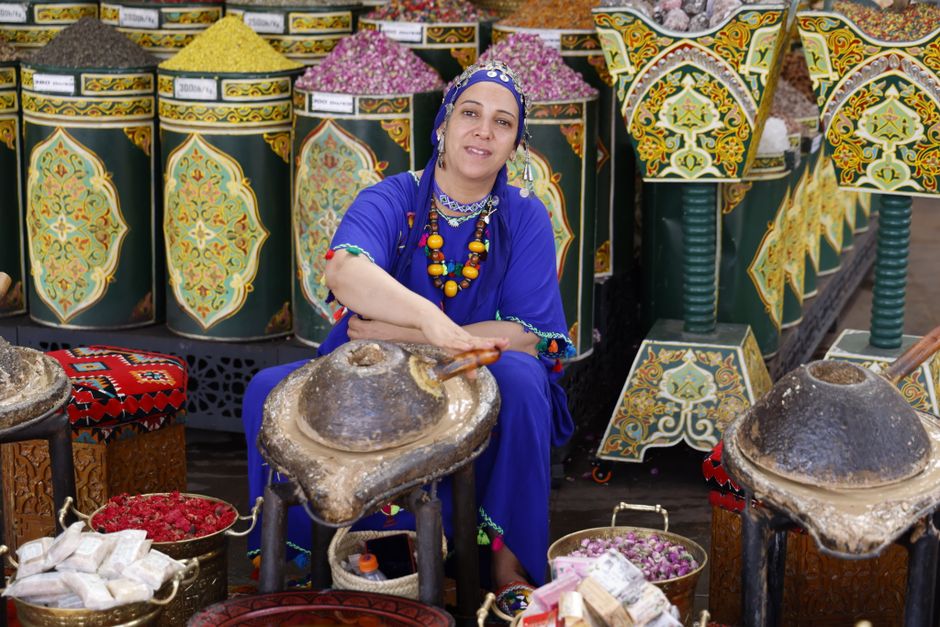
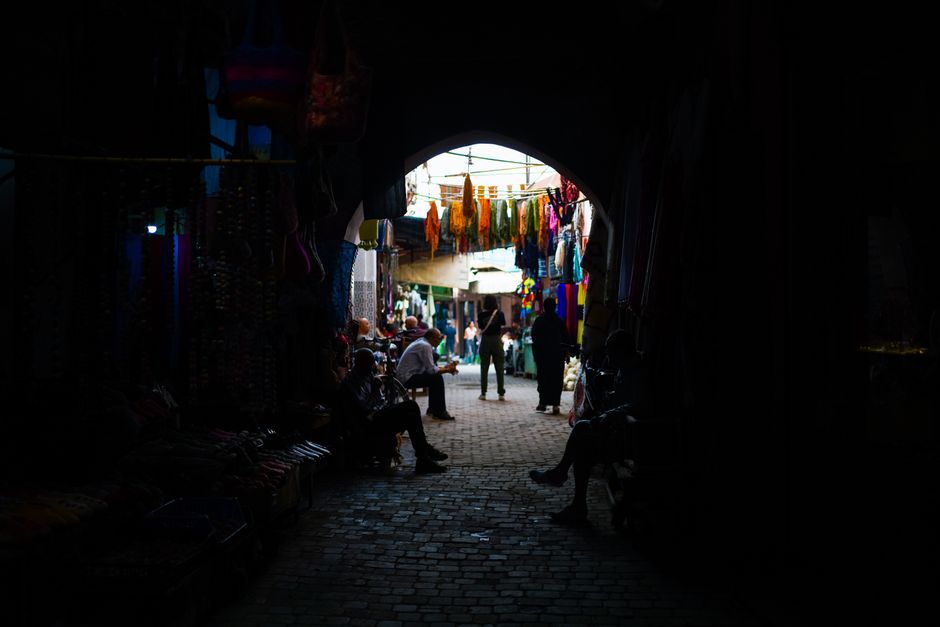
The Marrakech medina is smaller, better signposted, and more navigable. The main thoroughfares — Rue Bab Agnaou, Rue Mouassine, and the central Jemaa el-Fnaa square — are wide enough for two people to walk abreast. Google Maps works reasonably well for the main arteries. The souks are organized by trade (leather here, spices there, textiles further in), and the vendors are accustomed to tourists who want to browse without buying.
The Fes medina (Fes el-Bali) is a different proposition entirely. It is the largest car-free urban area in the world, covering roughly 300 hectares with over 9,000 alleyways. Many of these alleys are less than one meter wide. Google Maps is useless — the GPS signal bounces off the narrow walls and the map data is frequently wrong. The souks are not organized by trade in any predictable pattern. A copper workshop sits next to a bakery, which sits next a carpet seller, which sits next to a mosque entrance. There is no logic to it because the logic is 1,200 years old and predates the concept of zoning.
Practical advice for 2026: In Marrakech, you can navigate independently with a good offline map and a sense of direction. In Fes, hire a licensed guide for at least the first day. The official guides at the Bab Bou Jeloud gate charge 200-300 MAD ($20-30) for a half-day tour, and they will show you the tanneries, the madrasas, and the ceramic cooperatives in a logical sequence. More importantly, they will prevent you from wandering into the residential dead-end alleys where locals live — which is not dangerous, but is genuinely intrusive.
Cost of Cultural Immersion: What Your Money Actually Buys
Marrakech is more expensive across every category. A mid-range riad in the medina costs 600-1,200 MAD ($60-120) per night in 2026. A comparable riad in Fes costs 300-600 MAD ($30-60). Museum entry in Marrakech averages 100-150 MAD ($10-15) per site. In Fes, the madrasas cost 20-50 MAD ($2-5).
The price difference is not arbitrary. Marrakech’s higher costs reflect the infrastructure investment: better English signage, more trained guides, more restaurants with hygiene certifications, more reliable electricity and water in the riads. Fes’s lower costs reflect the absence of that infrastructure — but also the absence of the markup that comes with mass tourism.
The real calculation for a culture buff: For the same budget, you can spend 4 days in Marrakech or 7 days in Fes, including guided tours, museum entries, and better accommodation. If your goal is depth of experience rather than breadth, Fes offers substantially more cultural access per dollar. If your goal is comfort and variety, Marrakech justifies its premium.
What Marrakech Does That Fes Cannot
Marrakech has the Jardin Majorelle, which is overrated in terms of botanical significance but underrated as a cultural artifact — the garden represents the intersection of French Orientalist painting, Moroccan craft traditions, and Yves Saint Laurent’s personal aesthetic. That specific cultural fusion exists nowhere else.
Marrakech also has a genuinely vibrant contemporary art scene. The MACAAL museum rotates exhibitions from African artists working in photography, installation, and video. The 18th Street Gallery in the Gueliz district represents emerging Moroccan painters. The annual Marrakech Biennale (next edition scheduled for early 2026) brings international curators and collectors to the city. Fes has no comparable contemporary art infrastructure.
For the culture buff interested in modern Moroccan identity — how tradition interacts with globalization, how contemporary artists reference medieval craft — Marrakech is the better choice. Fes is a medieval city that happens to exist in the 21st century. Marrakech is a 21st-century city that has preserved its medieval core. These are different cultural propositions.
What Fes Does That Marrakech Cannot
Fes has the Chouara Tannery, which is not a tourist attraction in the way Jemaa el-Fnaa is a tourist attraction. The tanneries are working industrial sites. The smell is overwhelming. The workers are not performing for photographs — they are doing a job that has not changed materially since the 11th century. You can stand on the balconies of the surrounding leather shops and watch the entire process: soaking in lime, dyeing with natural pigments (poppy for red, indigo for blue, saffron for yellow), drying in the sun. No interpretive center. No audio guide. Just the raw, unmediated fact of a pre-industrial craft surviving into the 2026s.
Fes also has the University of Al-Qarawiyyin, which UNESCO recognizes as the oldest existing and continually operating educational institution in the world. The library, recently restored, holds a 9th-century Quran written on camel parchment and the original manuscript of Ibn Khaldun’s Muqaddimah. You can see these items, with advance permission, by contacting the library directly. No velvet ropes. No gift shop. Just the objects, in the building where they have been kept for centuries.
One final distinction: Fes has what Moroccans call “the real Morocco.” This phrase is overused in travel writing, but in this case it carries specific weight. If you want to understand how Moroccan culture actually works — how families function, how crafts are transmitted, how religious education operates — Fes will show you. Marrakech will show you a version of Morocco designed for your understanding. Both are valid. They are not the same.
The single most important takeaway: Choose Marrakech if you want curated, comfortable access to Moroccan culture with contemporary context; choose Fes if you want deep, unmediated immersion in a living medieval city where the culture is not performed for you, but simply continues to exist.