First-Time Solo Backpackers Southeast Asia Mistakes: 5 Mistakes First-Time Solo Backpackers Make in Southeast Asia (And How to Fix Them Before You Go)
You booked the flight to Bangkok. You have a 40-liter backpack. You watched five YouTube videos about packing cubes. Now what?
First-time solo backpackers in Southeast Asia make the same predictable errors — overplanning routes, under-budgeting for transport, and carrying gear that works in the Alps but melts in 35°C heat. These mistakes cost money, time, and sometimes safety.
I spent 14 weeks backpacking through Thailand, Vietnam, Cambodia, and Laos in 2026. I made most of these mistakes myself. Here are the five that hurt the most — and exactly how to avoid them.
1. The 10-City Itinerary Trap: Trying to See Everything in 3 Weeks
The mistake: Landing in Bangkok with a list of 12 destinations, 4 countries, and 3 internal flights planned for a 21-day trip. You arrive in Chiang Mai exhausted, spend one day there, then rush to an overnight bus to Luang Prabang. By week two, you are burned out and have seen nothing deeply.
Why it happens: Southeast Asia looks small on a map. Thailand to Vietnam is a 2-hour flight. But ground travel is slow. A bus from Bangkok to Chiang Mai takes 10 hours. A train from Hanoi to Ho Chi Minh City takes 30+ hours. The region rewards slow travel, not speed.
The fix: Pick 3-4 destinations max for a 3-week trip. One country is enough. Two countries is pushing it. Three is a mistake.
Here is a realistic 3-week itinerary for Thailand only, not three countries:
| Day | Location | Activity |
|---|---|---|
| 1-4 | Bangkok | Temples, street food, Khao San Road, Chatuchak Market |
| 5-9 | Chiang Mai | Elephant sanctuary, cooking class, Doi Suthep, night bazaar |
| 10-14 | Pai | Motorbike loop, waterfalls, canyon, slow days |
| 15-21 | Koh Phangan / Koh Tao | Beach, snorkeling, diving, Full Moon Party or quiet bay |
That is 4 places in 3 weeks. You will actually remember each one.
Use the app 12Go.asia to check real bus and train schedules before booking flights. It shows travel times accurately — not what Google Maps guesses.
Why rushing ruins the experience
You miss the accidental moments. The random conversation at a hostel rooftop. The street stall you walk past because you are checking bus times. The local festival you did not know existed. Slow travel creates memories. Fast travel creates checklists.
One rule: spend at least 3 nights in every destination. Two nights means one full day. That is not enough to adjust, explore, and relax.
2. Carrying a 15kg Backpack Through Humid Heat
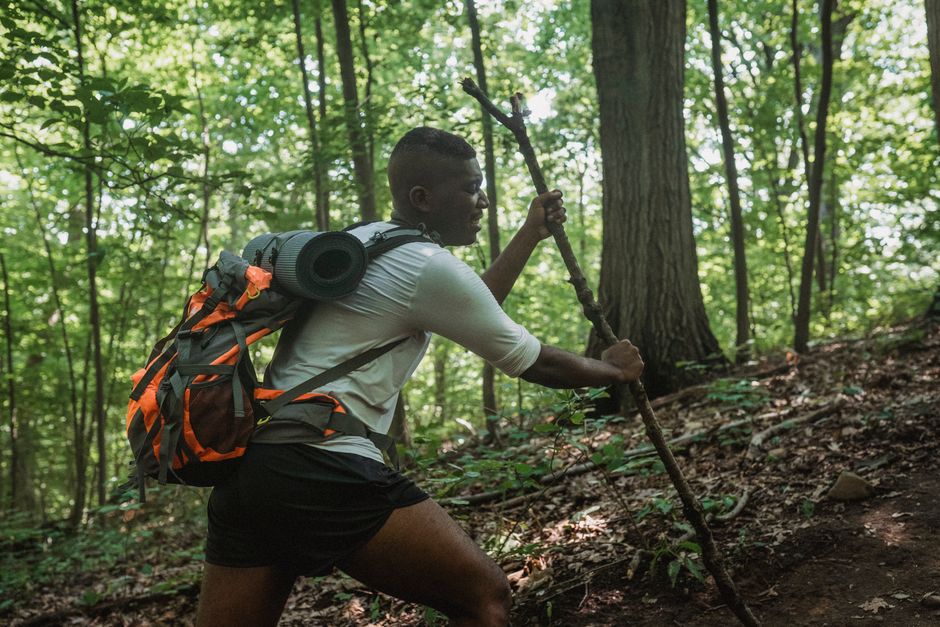
The mistake: Packing a 65-liter backpack stuffed with jeans, a heavy jacket “just in case,” three pairs of shoes, a laptop, and a full toiletry kit. You arrive at your hostel dripping sweat, back aching, wondering why everyone else carries a 35-liter bag.
The reality: Southeast Asia is hot and humid year-round. You do not need layers. You need breathable fabrics, quick-dry clothing, and minimal gear. Every kilogram you carry is a kilogram you sweat through.
The fix: Pack for 7 days, wash every 3-4 days. Laundry is cheap — $1-2 per kilogram at most hostels. You do not need 14 outfits.
Here is a realistic packing list for 3 months in Southeast Asia, total bag weight under 7kg:
- 4 quick-dry t-shirts (Uniqlo Airism or similar, $15 each)
- 2 pairs of shorts (one for hiking, one for town)
- 1 pair of lightweight pants (for temples and nicer restaurants)
- 1 pair of swim trunks / bikini
- 5 pairs of underwear and socks (merino wool if you can afford it)
- 1 light rain jacket (packable, under 200g)
- 1 pair of sandals (Havaianas or similar, $12)
- 1 pair of trail runners (not heavy hiking boots)
- A 20-liter daypack for daily use
Leave the laptop at home unless you work remotely. A phone is enough for booking, maps, and photos. Leave the jeans. Leave the hoodie. Leave the “emergency” gear you never touch.
Real numbers: A 35-liter backpack from Osprey (the Farpoint 40, $175) is the most common bag on the Banana Pancake Trail. It fits in overhead bins on budget airlines like AirAsia. A 65-liter bag costs extra for checked luggage on every flight — $20-40 per flight, which adds up fast.
3. Ignoring Local Transport Apps and Getting Scammed on Tuk-Tuks
The mistake: Arriving in Bangkok, waving down a tuk-tuk, and paying 300 baht ($9) for a 10-minute ride that should cost 80 baht. Or worse: accepting a “free” ride to a gem store that ends with high-pressure sales tactics.
Why it happens: First-time travelers do not know the local rates. Tuk-tuk drivers and taxi drivers in tourist areas charge 3-5x the real price. The meter “does not work” until you insist. Or the driver takes you to his cousin’s tailor shop instead of your destination.
The fix: Use Grab (the Uber of Southeast Asia) in Thailand, Vietnam, Malaysia, Indonesia, and the Philippines. Download it before you fly. It shows the exact price before you book. No haggling. No scams. No surprises.
Grab costs about the same as a metered taxi and less than a tuk-tuk. A 15-minute ride in Bangkok costs 100-150 baht ($3-4.50). A tuk-tuk for the same distance starts at 200 baht and requires negotiation.
For longer distances between cities, use 12Go.asia or Rome2rio to compare bus, train, and flight prices. Do not book through your hostel reception — they take a commission and mark up the price by 20-30%.
When a tuk-tuk is worth it
Short rides in heavy traffic (tuk-tuks weave through cars faster). Late at night when Grab is surging. For the experience — once. But never for airport transfers or long distances.
One more thing: never accept a ride from someone who approaches you at the airport arrivals gate. Walk past them. Go to the official taxi queue or the Grab pickup point. The airport taxi queue in Bangkok charges a 50 baht surcharge ($1.50) plus meter. That is the right price.
4. Skipping Travel Insurance (Then Needing It)
The mistake: Thinking “I am young and healthy, nothing will happen.” Then you rent a motorbike in Pai, slide on gravel, and end up in a Thai hospital with road rash and a broken collarbone. The bill: $2,500. Your bank account: empty.
Why it happens: Travel insurance feels like a waste of money until you need it. Most backpackers budget $30-50 per day for food and accommodation but refuse to spend $40 for a month of insurance. That is backwards thinking.
The fix: Buy travel insurance before you leave. Not the cheapest one — one that covers motorbike accidents (with a valid license), scooter rentals, and hospital stays. World Nomads and SafetyWing are the two most common choices among backpackers in Southeast Asia.
World Nomads costs about $100-150 for a month of coverage in Southeast Asia. SafetyWing starts at $45 per month. Both cover hospital visits, emergency evacuation, and trip interruption. Neither covers reckless behavior — so do not ride a motorbike drunk or without a license.
Real story: A friend in Chiang Mai got dengue fever. Three days in a private hospital. The bill was $1,800. Her SafetyWing policy paid it in full within two weeks. She had paid $56 for the month of coverage.
One more thing: check if your home country has reciprocal healthcare agreements with any Southeast Asian countries. Most do not. Australia has one with the UK. The US has none with any country in the region. Assume you are paying cash for everything and insure accordingly.
5. Booking the Cheapest Hostel Without Reading the Fine Print
The mistake: Booking a $4 dorm bed on Hostelworld because it is the cheapest option. You arrive to find: no air conditioning (just a ceiling fan in 35°C heat), no lockers, shared bathroom with no toilet paper, and a 2am curfew with a locked front door. You spend the night sweating, paranoid about your valuables, and leave the next morning feeling robbed — not of money, but of sleep.
Why it happens: Budget travelers optimize for price per night. They do not read recent reviews. They do not check for air conditioning, location safety, or security features. The cheapest bed is rarely the cheapest when you factor in lost sleep, stolen gear, or the cost of moving hostels mid-trip.
The fix: Use Hostelworld and Booking.com together. Filter by rating (minimum 8.0). Read the 10 most recent reviews — not the top ones. Look for specific mentions of: air conditioning (does it run all night or only 8pm-6am?), lockers (are they big enough for a backpack?), location (is it in a safe area with street food nearby?).
Pay $8-12 per night instead of $4-6. The difference is $4-8 per night — about $120-240 for a month. That extra money buys you: air conditioning that actually works, a locker that fits your bag, a social common area, and a front desk that can help you book tours. It is the best money you will spend on your trip.
Specific hostels that work:
- Bangkok: Lub d Bangkok Silom ($12/night, AC, lockers, rooftop bar)
- Chiang Mai: Stamps Backpackers ($8/night, pool, social vibe)
- Hanoi: Vietnam Backpacker Hostels ($10/night, AC, free breakfast)
- Ho Chi Minh City: The Common Room Project ($11/night, co-living style, quiet)
Book two nights at first. If you like it, extend. If not, you only wasted one night — not a week.
The solo backpacking experience in Southeast Asia is incredible when you get the basics right. Pack light. Move slow. Use local apps. Insure yourself. Sleep well. Everything else — the temples, the beaches, the food, the people — will take care of itself.